For most of internet history, the assumption has been simple: data lives on Earth. In buildings. On servers that need power, cooling, and physical maintenance. The cloud is a metaphor - the infrastructure is very much grounded.
That assumption is changing faster than almost anyone expected.
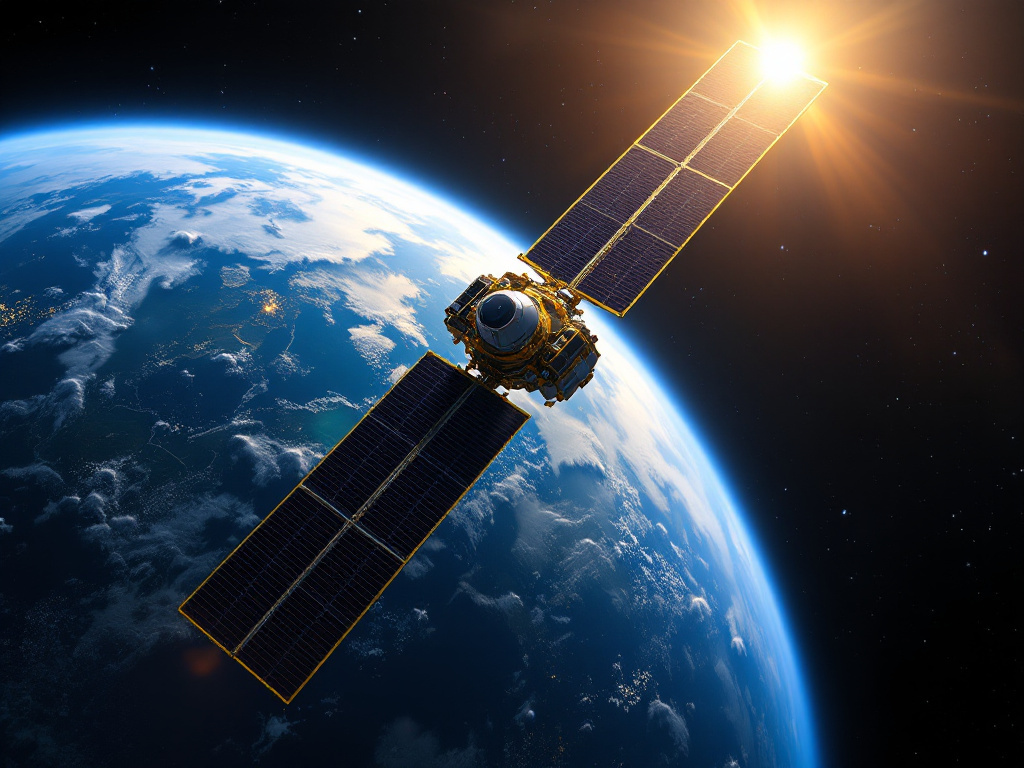
Kepler Communications launched 10 optical relay satellites on January 11, 2026, aboard a SpaceX Falcon 9 from Vandenberg Space Force Base. Each 300-kilogram satellite carries at least four optical terminals, multi-GPU compute modules, and terabytes of storage.
On the same launch, Axiom Space deployed the first two orbital data center nodes, creating infrastructure for in-space cloud computing and AI processing. SpaceX filed plans with the FCC for up to one million data center satellites. Google revealed radiation-hardened TPUs designed for space. A Y Combinator-backed company raised $170 million to build GPU clusters in orbit - and became the fastest unicorn in YC history.
The orbital data center race is real, it's happening now, and it's worth understanding.
What Actually Launched
On Monday, March 16, 2026, the launch of the first commercially operational "Orbital Cloud" marked a definitive shift from simple data transport to in-situ processing. Kepler's network transitioned from a high-speed data transport layer into a scalable, cloud-native processing environment, allowing customers to execute AI-driven workloads directly in orbit rather than relying on ground-based data centers.
In November 2025, Starcloud launched its first satellite, Starcloud-1, carrying an NVIDIA H100 - 100x more powerful GPU than has ever been operated in space before. The company became the first entity to train an LLM in space and the first to run a version of Gemini in orbit.
In March 2026, Starcloud raised a $170M Series A led by Benchmark, becoming the fastest unicorn in YC history, just 17 months after demo day.
Why Space? The Engineering Argument
The answer comes down to three things that space has in abundance that Earth increasingly lacks: energy, cooling, and physical space.
Unlimited solar power. Space-based data centers access near-continuous solar energy that delivers up to 8x more power per panel than ground installations. As AI workloads drive energy consumption to levels that strain national electricity grids, a power source that scales without building new transmission infrastructure becomes compelling.
Passive radiative cooling. Starcloud takes advantage of falling launch costs to make use of inexpensive solar energy in space and low-cost passive radiative cooling, rapidly scaling up orbital data centers almost indefinitely without the physical or permitting constraints faced on Earth.
No permitting. A hyperscale data center on Earth requires years of regulatory review, land acquisition, and grid connection negotiations. A satellite can be manufactured, tested, and launched in months.
The Players
Starcloud: focused on GPU compute for AI workloads. Starcloud-2, scheduled for October 2026, will have 100x the power generation of the first and generate more cash than it costs to build and launch.
Axiom Space: committed to expanding from kilowatts to megawatts of processing power, built with commercial off-the-shelf hardware, running industry-standard containerized operating systems.
SpaceX: SpaceX filed an FCC application on January 30 for up to one million orbital data center satellites at altitudes between 500 and 2,000 kilometers. The filing projects that launching one million tonnes of satellites annually would generate 100 gigawatts of AI compute capacity.
Google Project Suncatcher: exploring equipping solar-powered satellite constellations with Tensor Processing Units (TPUs) and free-space optical links for distributed machine learning.
Lonestar Data Holdings: focused on sovereign data storage. Their president argues the near-term killer application is storage: "Storage is very low power. It takes up less than 15 percent of a typical data center's power. It's going to be distributed over many satellites - and a big benefit there is resiliency."
The Data Sovereignty Angle
The tightening global regulatory landscape creates a compelling case: data infrastructure has also become a target of active conflict. A satellite-based storage vault, under established international space law, remains within a nation's sovereign jurisdiction while being physically unreachable to any adversary on the ground.
For governments, defense agencies, and regulated industries, this combination - legally sovereign, physically secure, distributed across orbital planes - represents a genuinely new category of infrastructure.
The Real Challenges
The US Government Accountability Office published a Science & Tech Spotlight on space-based data centers in April 2026, noting that deployment of some data center satellites is planned by the mid-2030s, with significant engineering and economic barriers remaining.
Data centers generate excess heat, but space does not cool computing hardware efficiently. This could be a major engineering challenge. A significant increase in the number of satellites in orbit could be difficult to manage and cause collisions.
Google's feasibility study argued that if launch costs to low Earth orbit reached $200/kg, the launch cost for data center satellites could be cost effective relative to current energy costs for ground-based data centers. They project this may occur around 2035 if SpaceX's Starship project scales to 180 launches per year by then.
Why This Matters for Anyone Who Stores Data
The orbital computing race matters for photographers and videographers in the same way the original cloud computing revolution mattered: it changes what's possible, at what cost, at what scale.
The first wave of cloud computing made it possible to store and deliver gigabytes of professional photography work for a monthly fee that small businesses could afford. The orbital computing wave, arriving over the next decade, is likely to drive costs lower still - while adding resilience and geographic distribution that ground-based infrastructure can't match.
The next 24 months will be defined by the "Starship Effect" - as launch costs continue to drop toward the $200/kg threshold, the economic argument for hyperscale orbital deployments becomes undeniable. The focus will shift from proving the hardware works to standardizing the "inter-satellite backplane" that will connect these floating data centers into a seamless extension of the global cloud.
The storage infrastructure underneath platforms like DAT Drives will eventually connect to orbital nodes the way it currently connects to ground-based data centers. Not this year. But the direction is clear.
DAT Drives stores your photos and video on S3-compatible cloud infrastructure today - and watches where the infrastructure is going. 2TB of storage for professional photographers and videographers.